



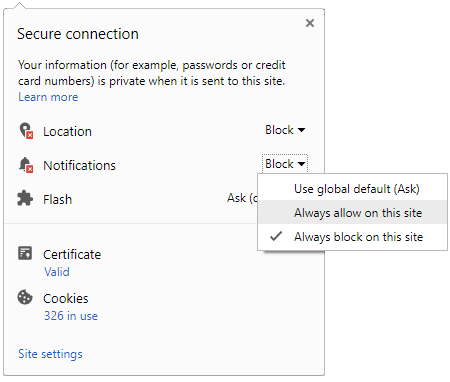
 Click it and Unblock the Notifications
అకౌంట్స్ గమనికలుShringar House of Mangalsutra Ltd.
2.11 Provisions, Contingent liabilities, Contingent assets and Commitments:
Provisions are recognised when the Company has a present obligation (legal or constructive) as a result of a past event, it is
probable that an outflow of resources embodying economic benefits will be required to settle the obligation and a reliable
estimate can be made of the amount of the obligation. When the Company expects some or all of a provision to be reimbursed, for
example, under an insurance contract, the reimbursement is recognised as a separate asset, but only when the reimbursement is
virtually certain. The expense relating to a provision is presented in the statement of profit and loss net of any reimbursement.
If the effect of the time value of money is material, provisions are discounted using a current pre-tax rate that reflects, when
appropriate, the risks specific to the liability. When discounting is used, the increase in the provision due to the passage of time is
recognised as a finance cost.
Contingent liability is disclosed in the case of:
1. A present obligation arising from the past events, when it is not probable that an outflow of resources will be required to settle the
obligation;
2. A present obligation arising from the past events, when no reliable estimate is possible;
3. A possible obligation arising from the past events, unless the probability of outflow of resources is remote.
Provisions, contingent liabilities, contingent assets and commitments are reviewed at each balance sheet date.
2.12 Taxes
Current Tax
Current income tax assets and liabilities are measured at the amount expected to be recovered from or paid to the taxation
authorities, based on the rates and tax laws enacted or substantively enacted, at the reporting date in the country where the entity
operates and generates taxable income.
Current tax items are recognised in correlation to the underlying transaction either in OCI or directly in equity.
Management periodically evaluates positions taken in the tax returns with respect to situations in which applicable tax
regulations are subject to interpretation and establishes provisions where appropriate.
Deferred Tax
Deferred tax is provided using the balance sheet approach on temporary differences at the reporting date between the tax bases
of assets and liabilities and their corresponding carrying amounts for the financial reporting purposes.
Deferred tax assets are the amounts of income taxes recoverable in future periods in respect of:
1. deductible temporary differences;
2. the carry forward of unused tax losses; and
3. the carry forward of unused tax credits.
The carrying amount of deferred tax assets is reviewed at each reporting date and reduced to the extent that it is no longer
probable that sufficient taxable profit will be available to allow all or part of the deferred tax asset to be utilised. Unrecognised
deferred tax assets are re-assessed at each reporting date and are recognised to the extent that it has become probable that
future taxable profits will allow the deferred tax asset to be recovered.
Deferred tax assets and liabilities are measured at the tax rates that are expected to apply in the year when the asset is realised or
the liability is settled, based on tax rates (and tax laws) that have been enacted or substantively enacted at the reporting date.
Deferred tax relating to items recognised outside profit or loss is recognised outside profit or loss (either in other comprehensive
income or in equity). Deferred tax items are recognised in correlation to the underlying transaction either in OCI or directly in equity
Deferred tax assets and deferred tax liabilities are offset if a legally enforceable right exists to set off current tax assets against
current tax liabilities and the deferred taxes relate to the same taxable entity and the same taxation authority.
2.13 Revenue recognition
Revenue Recognition Revenue is recognised upon transfer of control of promised goods or services to customers in an amount
that reflects the consideration the Company expects to receive in exchange for those goods or services.
a) Sale of goods: Revenue from the sale of products is recognised at the point in time when control is transferred to the customer.
Revenue is measured based on the transaction price, which is the consideration, net of customer incentives, discounts, variable
considerations, payments made to customers, other similar charges, as specified in the contract with the customer. Additionally,
revenue excludes taxes collected from customers, which are subsequently remitted to governmental authorities.
b) Interest income: Interest income from a financial asset is recognised when it is probable that the economic benefits will flow to
the Company and the amount of income can be measured reliably. Interest income is accrued on a time basis, by reference to the
principal outstanding and at the effective interest rate applicable, which is the rate that exactly discounts estimated future cash
receipts through the expected life of the financial asset of that asset''s net carrying amount on initial recognition.
Other Income
Other income comprises primarily interest income on deposits, dividend income and gain/(loss) on disposal of financial assets
and non-financial assets. Interest income is recognised using the effective interest method. Dividend income is recognised when
the right to receive payment is established.
2.14 Embedded derivative
The Group enters into purchase of gold contract, in which the amount payable is not fixed based on gold price on the date of
purchase, but instead is affected by changes in gold prices in future. Such transactions are entered into to protect against the risk
of gold price movement in the purchased gold. Accordingly, such unfixed payables (gold loan) are considered to have an
embedded derivative. The Group designates the gold price risk in such instruments as hedging instruments, with gold inventory
considered to be the hedged item. The hedged risk is gold prices movement.
2.15 Government Grants
Government grants are recognised where there is reasonable assurance that the grant will be received and all attached conditions
will be complied with. All the grants related to an expense item are recognised as income on a systematic basis over the periods
that the related costs, for which it is intended to compensate, are expensed.
2.16 Employee Benefits
A Short-term employee benefits
A liability is recognised for benefits accruing to employees in respect of wages and salaries in the period the related service is
rendered at the undiscounted amount of the benefits expected to be paid in exchange for that service. Short-term employee
benefits are measured on an undiscounted basis as the related service is provided.
B Compensated absences
The employees of the Company are entitled to compensated absences. Accumulated compensated absences, which are
expected to be availed within every quarter. Employees cannot carry forward a portion of the unutilized accumulating
compensated absenses beyond quarter and utilize it in future periods or receive cash at retirement or termination of employment.
The group records an obligation for compensated absenses in the period in which the employee renders the services that
increases this entitlement.
C Defined contribution plan
Under a defined contribution plan, the Company''s only obligation is to pay a fixed amount with no obligationto pay further
contributions if the fund does not hold sufficient assets to pay all employee benefits. The Company makes specified monthly
contributions towards Employee Provident Fund to Government administered Provident Fund Scheme which is a defined
contribution plan. The expenditure for defined contribution plan is recognised as expense during the period when the employee
provides service.
D Defined benefit plan
In accordance with the Payment of Gratuity Act, 1972, the Company provides for a lump sum payment to eligible employees, at
retirement or termination of employment based on the last drawn salary and years of employment with the Company. The present
value of gratuity obligation under such defined benefit plan is determined based on actuarial valuations carried out by an external
actuary using the Projected Unit Credit Method. The Company recognises the net obligation of a defined benefit plan in its balance
sheet as an asset or liability.
The Company recognises the following changes in the net defined benefit obligation as an expense in the statement of profit & loss:
- Service costs comprising current service costs, past service costs, gains & losses on curtailments and non-routine settlements; and
- Net interest expense or income"
Actuarial gains or losses are recognised in other comprehensive income. Further, the statement of profit and loss does not include
an expected return on plan assets. Instead, net interest recognised in the statement of profit and loss is calculated by applying the
discount rate used to measure the defined benefit obligation to the net defined benefit liability or asset. The actual return on the
plan assets above or below the discount rate is recognised as part of remeasurement of net defined liability or asset through other
comprehensive income. The Company had not recognised gratuity liability under IGAAP till March 31,2023.
Re-measurement comprising actuarial gains or losses and return on plan assets (excluding amounts included in net interest on
the net defined benefit liability) are not reclassified to the statement of profit and loss in subsequent periods.
2.17 Borrowing Cost
Borrowing costs directly attributable to the acquisition, construction or production of an asset that necessarily takes a
substantial period of time to get ready for its intended use or sale are capitalised as part of the cost of the asset. All other
borrowing costs are expensed in the period in which they occur. Borrowing costs consist of interest and other costs that the
Company incurs in connection with the borrowing of funds.
2.18 Cash Flow Statement
Cash flows are reported using the indirect method, whereby profit for the period is adjusted for the effects of transactions of a non¬
cash nature, any deferrals or accruals of past or future operating cash receipts or payments and item of income or expenses
associated with investing or financing cash flows. The cash flows from operating, investing and financing activities of the
Company are segregated.
2.19 Segment Reporting
Operating segments are reported in the manner consistent with the internal reporting to the chief operating decision maker (CODM).
As per CODM, the Company is reported at an overall level, and hence there are no separate reportable segments as per Ind AS 108.
2.20 Foreign currency transactions and balances
Foreign currency transactions are translated into the functional currency using the exchange rates prevailing at the dates of the
respective transactions. Foreign-currency denominated monetary assets and liabilities are translated into the functional
currency at exchange rates in effect at the reporting date.
Foreign exchange gains and losses resulting from the settlement of such transactions and such translation of monetary assets
and liabilities denominated in foreign currencies are generally recognised in the statement of profit and loss.
Non-monetary assets and liabilities denominated in a foreign currency and measured at fair value are translated at the exchange
rate prevalent at the date when the fair value was determined. Non-monetary assets and liabilities denominated in a foreign
currency and measured at historical cost are translated at the exchange rate prevalent at the date of transaction. Foreign currency
gains and losses are reported on a net basis. This includes changes in the fair value of foreign exchange derivative instruments,
which are accounted at fair value through profit or loss.
2.21 Earnings per share
Basic earnings per share are calculated by dividing the net profit for the period attributable to equity shareholders by the weighted
average number of equity shares outstanding during the period. Earnings considered in ascertaining the Company''s earnings per
share is the net profit for the period after deducting preference dividends and any attributable tax thereto for the period. The
weighted average number of equity shares outstanding during the period and for all periods presented is adjusted for events, such
as bonus shares, other than the conversion of potential equity shares that have changed the number of equity shares outstanding,
without a corresponding change in resources.
For the purpose of calculating diluted earnings per share, the profit or loss for the period attributable to equity shareholders and the
weighted average number of shares outstanding during the period is adjusted for the effects of all dilutive potential equity shares.
2.22 New and amended Indian Accounting Standards (Ind AS)
"Ministry of Corporate Affairs ("MCA") notifies new standards or amendments to the existing standards under Companies (Indian
Accounting Standards) Rules as issued from time to time.
In May 2025, MCA notified amendments to:
Ind AS 21 - The Effects of Changes in Foreign Exchange Rates, applicable w.e.f. April 1, 2025. The Company has reviewed the
amendment and based on its evaluation has determined that it does not have any significant impact in its financial statements.
In August 2025, MCA notified the following amendments to:
Ind AS 7, Statement of Cash Flows and Ind AS 107, Financial Instruments: Disclosures, applicable w.e.f. April 1, 2025 - the
amendment in Ind AS 7 requires to inform users of financial statements of the existence of supplier finance arrangements and
explain the nature of the arrangements, the carrying amount of liabilities and the range of payment due dates. Ind AS 107 has been
amended to add supplier finance arrangements as a factor that may cause concentration of liquidity risk. The Company has
reviewed the amendment and based on its evaluation has determined that it does not have any impact in its financial statements.
Ind AS 12, International Tax Reform - Pillar Two Model Rules applicable immediately - The amendments provide a temporary
mandatory relief from deferred tax accounting for top-up tax and disclose that they have applied the relief. This relief is immediate
and applies retrospectively."
*During the year, the company has made an Initial Public Offering (IPO) for 2,43,00,000 equity shares of ''10 each, comprising a fresh
issue of 2,43,00,000 equity shares of the company. The equity shares were issued at a price of ''165 per equity share (including a Share
Premium of ''155 per equity share). Pursuant to the aforesaid allotment of equity shares, the issued, subscribed and paid-up capital of
the company stands increased to ''96,43,20,800 (9,64,32,080 equity shares of ''10 each). The company''s equity shares got listed on
National Stock Exchange of India Limited and on BSE Limited on 17th September 2025.
**The Board of Directors at its meeting held on 31 March 2012 had approved the forfeiture of 1,50,000 partly paid up shares. These
share further reissued dated 27 November 2024 to Mr. Chetan Thadeshwar at a premium of ''182 per share.
***The Board of Directors at its meeting held on 30 November 2024 had approved the bonus issue of seven new equity share for every
one share held on record date which was approved by the shareholders by means of a special resolution dated 30 November 2024.
Through a Board resolution dated 30 November 2024, the Company has allotted 63,115,570 equity shares of ''10 each as bonus
shares to the existing equity shareholders of the Company.
b. Rights, preferences and restrictions attached to shares
The Company has single class of equity shares. Each shareholder is eligible for one vote per share held. The dividend proposed by the
Board of Directors is subject to the approval of the shareholders. In the event of liquidation, the equity shareholders are eligible to
received the remaining assets of the Company after distribution of all preferential amounts, in proportion to their shareholding.
Brief description of other equity:
a. Securities Premium: Securities premium is used to record the premium on issue of shares. The premium received during the year
represents the premium received towards allotment of shares. It can be utilised only for limited purposes in accordance with the
provisions of the Companies Act, 2013.
b. Retained Earnings: This represents the cumulative profits of the company. This reserve is free reserves and can be utilised for any
purpose as may be required. All Adjustments arising on account of transition to Ind AS are recorded under this reserve.
c. Capital Reserve: This represent the amount of 1,50,000 forfeited shares partly paid up earlier.
d. Other Comprehensive Income: Remeasurements of the net defined benefits plan reserve comprise the cumulative net gains/
losses on actuarial valuation of post-employment obligations.
1. Term Loan for purchase of Property is repayable in 5 years in monthly instalments as per the sanction letter, Maturity is due in
January-2027. The loan bears a floating rate of interest, currently at 7.55% p.a. Term loan is secured against flats classified as
Investment Property.
2. Vehicle loan availed for the purchase of a vehicle was fully prepaid during the year, and the company has obtained a NOC from the
lending bank.
3. Cash Credit, Working Capital Demand Loan and Gold Metal Loan facilities are secured against hypothecation over inventories,
receivables, current assets and movable fixed assets, along with mortgage of leasehold office premises, investment properties
and properties belonging to the directors. These facilities are also secured by personal guarantees provided by Chetan
Thadeshwar, Viraj Thadeshwar & Mamta Thadeshwar.
4. Short-term working capital demand loan has been availed from banks for financing of the working capital requirement for a period
of 7-180 days. The rate of interest on the facilities ranges between 7.65% p.a. - 9.00% p.a. (31 March 2025: 9.00% p.a. - 12.05% p.a.)
*Amounts payable against gold purchased from banks under Gold on loan scheme. The interest rate of the same varies from 2.1%
- 6% (31 March 2025 : 3.20% - 8.30%). The credit period under the aforesaid arrangement is upto 180 days from the date of the
delivery of gold.
5. Cash credit facilities from banks carry interest ranges between 7.65% p.a. - 9.00% p.a. (31 March 2025: 8.75% p.a. - 11.65% p.a.)
6. There are no defaults in the repayment of principal or interest to lenders as at March 31,2026 and March 31,2025.
Note 35 : Employee benefit expense
The Company contributes to the following post-employment defined benefit plans in India.
A. (i) Defined Contribution Plans:
The Company makes contributions towards provident fund to a defined contribution retirement benefit plan for qualifying employees.
Under the plan, the Company is required to contribute a specified percentage of payroll cost to the retirement benefit plan to fund the
benefits.
The contributions payable to these plans by the Company are at rates specified in the rules of the schemes.
The Company recognised ''0.37 Millions (31st March 2025 ''0.33 Millions) for provident and other fund contributions in the Statement
of Profit and Loss.
(ii) Defined Benefit Plan :
The Company has a defined benefit unfunded gratuity plan in India, governed by the Payment of Gratuity Act,1972. It entitles an
employee, who has rendered at least five years of continuous service, to gratuity at the rate of fifteen days wages for every completed
year of service or part thereof in excess of six months, based on the rate of wages last drawn by the employee concerned. These
defined benefit plans expose the Company to actuarial risks, such as longevity risk, interest rate risk and market (investment) risk.
A. Assets and liabilities related to employee benefits
Based on the actuarial valuation obtained in this respect, the following table sets out the status of the gratuity plan and the amounts
recognised in the Company''s financial statements as at balance sheet date:
These sensitivity analysis have been determined based on reasonable possible changes of the respective assumptions occurring at
the end of the reporting period, while holding all other assumptions constant.
iii. Exceptional items: The Code on Social Security, 2020 (New Labour Code)
Effective November 21,2025, the Government of India consolidated 29 existing labour regulations into four Labour codes, namely, The
Code on Wages, 2019, The Industrial Relations Code, 2020, The Code on Social Security, 2020 and the Occupational Safety, Health and
Working Conditions Code, 2020, collectively referred to as the ''New Labour Codes''. The New Labour Codes has resulted in a one-time
material increase in provision for employee benefits on account of recognition of past service costs. Based on the requirements as per
the of New Labour Codes and relevant Accounting Standard, the Company has assessed and accounted the estimated incremental
impact as Exceptional Item in the statement of profit and loss for the year ended March 31, 2026 amounting to Rs 0.45 Mn. Upon
notification of the related Rules to the New Labour Codes by the Government and any further clarification from the Government on
other aspects of the New Labour Codes, the Company will evaluate and account for additional impact if any, determined in
subsequent periods.
B. Measurement of fair values (Key inputs for valuation techniques) :
Valuation techniques and significant unobservable inputs: Not applicable (Level 3)
C. Transfers between Levels 1 and 2
There were no transfer from Level 1 to Level 2 or vice versa in any of the reporting periods.
D. Financial risk management
The Company has exposure to the following risks arising from financial instruments:
⢠Credit risk;
⢠Liquidity risk; and
⢠Market risk
i. Risk management framework
The Company''s board of directors has overall responsibility for the establishment and oversight of the Company''s risk management
framework. The board of directors is responsible for developing and monitoring the Company''s risk management policies.
The Company''s risk management policies are established to identify and analyse the risks faced by the Company, to set appropriate
risk limits and controls and to monitor risks and adherence to limits. Risk management policies and systems are reviewed regularly to
reflect changes in market conditions and the Company''s activities. The Company, through its training and management standards
and procedures, aims to maintain a disciplined and constructive control environment in which all employees understand their roles
and obligations.
The Managing Director and Wholetime Director oversees how management monitors compliance with the company''s risk
management policies and procedures and reviews the adequacy of the risk management framework in relation to the risks faced by
the Company. The Managing Director and Wholetime Director is assisted in its oversight role by internal audit. Internal audit
undertakes both regular and ad-hoc reviews of risk management controls and procedures, the results of which are reported to the
Managing Director and Wholetime Director.
ii. Credit risk
Credit risk is the risk of financial loss to the Company if a customer or counterparty to a financial instrument fails to meet its
contractual obligations and arises principally from the Company''s receivables from customers. The Company has very limited history
of customer default, and considers the credit quality of trade receivables that are not past due or impaired to be good.
The credit risk for cash and cash equivalents, bank deposits, loans and financial instruments is considered negligible. The carrying
amount of following financial assets represents the maximum credit exposure:
T rade and other receivables
Trade receivables as on 31st March 2026 is ''2,357.46 (31st March 2025 is ''877.74). The Company has disclosed concentration of
customer under segment reporting in Financial Statement.
The Company''s exposure to credit risk is influenced mainly by the individual characteristics of each customer. However, management
also considers the factors that may influence the credit risk of its customer base, including the default risk of the industry and country
in which customers operate.
The Company has established a credit policy under which each new customer is analysed individually for creditworthiness before
the Company''s standard payment and delivery terms and conditions are offered.
As per simplified approach, the Company makes provision of expected credit losses on trade receivables in accordance of the
requirement of Ind AS 109.
Cash and cash equivalents
The Company maintains its Cash and cash equivalents and Bank deposits with banks having good reputation, good past track record
and high quality credit rating and also reviews their credit-worthiness on an on-going basis.
iii. Liquidity risk
Liquidity risk is the risk that the Company will encounter difficulty in meeting the obligations associated with its financial liabilities
that are settled by delivering cash or another financial asset. The Company''s approach to managing liquidity is to ensure, as far as
possible, that it will have sufficient liquidity to meet its liabilities when they are due, under both normal and stressed conditions,
without incurring unacceptable losses or risking damage to the Company''s reputation.
The Company uses product-based costing to cost its products and services, which assists it in monitoring cash flow requirements
and optimizing its cash return on investments. The Company monitors the level of expected cash inflows on trade and other
receivables together with expected cash outflows on trade and other payables.
Exposure to liquidity risk
The following are the remaining contractual maturities of financial liabilities at the reporting date. The amounts are gross and
undiscounted, and include estimated interest payments and exclude the impact of netting agreements.
Financial instruments - Fair values and risk management (continued)
iv. Market risk
Market risk is the risk that changes in market prices - such as foreign exchange rates and interest rates - will affect the Company''s
income or the value of its holdings of financial instruments. Market risk is attributable to all market risk sensitive financial instruments
including foreign currency receivables and payables and long term debt. We are exposed to market risk primarily related to foreign
exchange rate risk and interest rate risk. Thus, our exposure to market risk is a function of revenue generating and operating activities in
foreign currency. The objective of market risk management is to avoid excessive exposure in our foreign currency revenues and costs.
Currency risk
The Company is exposed to currency risk on account of its borrowings, Trade payable, other payables and receivables in foreign
currency. The functional currency of the Company is Indian Rupee. The Company uses forward exchange contracts to hedge its
currency risk, most with a maturity of less than one year from the reporting date.
Interest rate risk
Interest rate risk can be either fair value interest rate risk or cash flow interest rate risk. Fair value interest rate risk is the risk of
changes in fair values of fixed interest bearing finacial instruments because of fluctuations in the interest rates. Cash flow interest
rate risk is the risk that the future cash flows of floating interest bearing financial instruments will fluctuate because of fluctuations in
the interest rates.
Exposure to interest rate risk
The Company''s interest rate risk arises from borrowings and fixed income financial instruments. Borrowings issued at fixed rates
exposes to fair value interest rate risk. The interest rate profile of the Company''s interest-bearing financial instruments as reported to
the management of the Company is as follows:
Fair value sensitivity analysis for fixed-rate instruments
The Company does not account for any fixed-rate financial assets or financial liabilities at fair value through profit or loss, and the
Company does not designate derivatives as hedging instruments under a fair value hedge accounting model. Therefore, a change in
interest rates at the reporting date would not affect profit or loss.
Cash flow sensitivity analysis for variable-rate instruments
A reasonably possible change of 100 basis points in interest rates at the reporting date would have increased (decreased) profit or
loss by the amounts shown below. This analysis assumes that all other variables, in particular foreign currency exchange rates,
remain constant.
The Company''s policy is to maintain a strong capital base so as to maintain investor, creditor and market confidence and to sustain
future development of the business.
The Company monitors capital using a ratio of ''adjusted net debt'' to ''adjusted equity''. For this purpose, adjusted net debt is defined as
total borrowings, comprising interest-bearing loans and borrowings less cash and cash equivalents. Adjusted equity comprises all
components of equity.
Note 40 : Fair value hedge of gold price risk in inventory
The Company enters into contracts for purchase of gold wherein the Company has the option to fix the purchase price based on
market price of gold during a stipulated time period. The prices are linked to gold prices. Accordingly, these contracts are considered
to have an embedded derivative (represented in the said option to fix the price) that is required to be separated from the host contract
which is the gold loan liability. Such feature is kept to hedge against exposure in the value of inventory of gold due to volatility in gold
prices. The Company designates the embedded derivative in the payable for such purchases as the hedging instrument in fair value
hedging of inventory. The Company designates only the spot-to-spot movement of the gold inventory as the hedged risk. The
carrying value of inventory which are designated under fair value hedge relationship are measured at fair value at each reporting date.
There is no ineffectiveness in the relationships designated by the Company for hedge accounting.
Disclosure of effects of fair value hedge accounting on financial position:
Hedged item - Changes in fair value of inventory attributable to change in gold prices
Hedging instrument - Changes in fair value of the option to fix prices of gold purchases, as described above
Segment information
The Company is required to disclose segment information based on the ''management approach'' as defined in Ind AS 108 - Operating
Segments, which is how the Chief Operating Decision Maker (CODM) evaluates the Company''s performance and allocates resources
based on the analysis of the various performance indicators. In the case of the Company, the CODM reviews the results of the
Company as a whole as the Company is primarily engaged in the business of manufacturing of mangalsutra. Accordingly, the
Company is a single CGU, hence single segment Company. The information as required under Ind AS 108 is available directly from the
financial statements, hence no separate disclosures have been made.
Other Statutory Information:
(i) The Company does not have any Benami property, where any proceeding has been initiated or pending against the company for
holding any Benami property.
(ii) The Company does not have any transactions with companies struck off.
(iii) The Company has not traded or invested in Crypto currency or Virtual currency during the financial year.
(iv) The Company does not have any charges or satisfaction which is yet to be registered with ROC beyond the statutory period.
(v) The Company has not advanced or loaned or invested funds to any other person(s) or entity(ies), including foreign entities
(Intermediaries) with the understanding that the Intermediary shall:
(a) directly or indirectly lend or invest in other persons or entities identified in any manner whatsoever by or on behalf of the
Company (Ultimate Beneficiaries) or
(b) provide any guarantee, security or the like to or on behalf of the Ultimate Beneficiaries.
(vi) The Company has not received any fund from any person(s) or entity(ies), including foreign entities (Funding Party) with the
understanding (whether recorded in writing or otherwise) that the Company shall:
(a) directly or indirectly lend or invest in other persons or entities identified in any manner whatsoever by or on behalf of the
Funding Party (Ultimate Beneficiaries) or
(b) provide any guarantee, security or the like on behalf of the Ultimate Beneficiaries,"
(vii) The Company does not have any such transaction which is not recorded in the books of accounts that has been surrendered or
disclosed as income during the year in the tax assessments under the Income Tax Act, 1961 (such as, search or survey or any
other relevant provisions of the Income Tax Act, 1961)
(viii) The Company has not been declared as Wilful defaulter by any Banks, Financial institution or Other lenders.
(ix) The Company is in compliance with the number of layers prescribed under clause (87) of section 2 of the Companies Act, 2013
read with the Companies (Restriction on number of Layers) Rules, 2017 (as amended).
Disclosure for maintenance of books of accounts with Audit Trail (Edit Log) :
During the year, the Company has widely used accounting software for maintaining books of accounts. The accounting software
used by the Company has feature of recording audit trail (edit log) facility and the same has been operated throughout the year for all
relevant transactions recorded in the software except the fields in which the changes are made are not captured by system. During the
course of performing our procedures, we did not notice any instance of audit trail feature being tampered with, for the period the audit
trail feature was enabled. Further, the audit trail has been preserved by the Company as per the statutory requirements for record
retention.
In the opinion of the management, the current asset, loan and advances and current liabilities are approximately of the value stated, if
realised / paid in ordinary course of business. The provision for all known liabilities is adequate and is not in excess of amounts
considered reasonably necessary.
Balances of advances, deposits, trade receivables, trade payables and other debit and credit balances are subject to confirmation and
reconciliation in certain cases. Adjustments, if any, in this regard would be carried out as and when ascertained, which in view of the
management would not be material.
(xi) Return on Investment
The Company has not carried out investments and accordingly disclosure for Return on Investment is not applicable.
Note A : In case of change in ratio is not more than 25%, requirement to furnish explanations is not applicable as per stipulation
mentioned in Schedule III to the Act.
Events after the reporting period :
There are no material subsequent events with regard to the financial position as at 31st March, 2026
Figures for the previous year have been regrouped/ reclassified wherever necessary to confirm to current year''s classification. The
impact of such reclassification/ regrouping is not material to these financial statements.
Disclaimer: This is 3rd Party content/feed, viewers are requested to use their discretion and conduct proper diligence before investing, GoodReturns does not take any liability on the genuineness and correctness of the information in this article

 Sign in with Google