



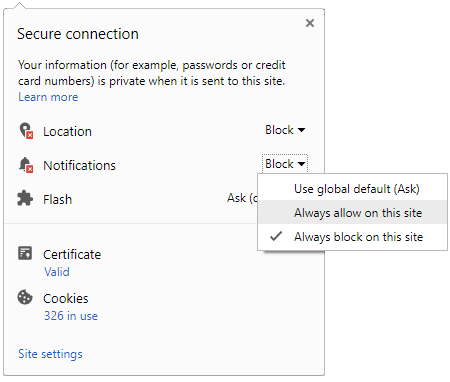
 Click it and Unblock the Notifications
Shringar House of Mangalsutra Ltd. కంపెనీ అకౌంటింగ్ విధానాలు
2 Material Accounting Policies
This note provides a list of the Material accounting policies adopted in the preparation of these Ind AS financial statements.
Accounting policies have been consistently applied except where a newly issued Indian Accounting Standard is initially adopted
or a revision to an existing Indian Accounting Standard requires a change in the accounting policy hitherto in use.
2.1 Basis of preparation
Statement of compliance
These financial statements are prepared in accordance with Indian Accounting Standards (Ind AS) and the provisions of the
Companies Act, 2013 (''the Act'') (to the extent notified). The Ind AS are prescribed under Section 133 of the Act read with Rule 3 of the
Companies (Indian Accounting Standards) Rules, 2015 and Companies (Indian Accounting Standards) Amendment Rules, 2016.
The Ind AS financial statements are presented in Indian Rupees (?) which is also the Company''s functional currency and all
amounts have been rounded off to the nearest Million, unless otherwise stated.
Basis for Measurement
The financial statements have been prepared on a historical cost convention and on an accrual basis, except for the following:
i. Certain financial assets and liabilities that are qualified to be measured at fair value (refer accounting policy on financial
instruments);
ii. employee benefits where plan asset is measured at fair value less present value of defined benefit obligations ("DBO").
2.2 Use of estimates and judgements
The preparation of the financial statements in conformity with Ind AS requires management to make judgements, estimates and
assumptions that affect the application of accounting policies and the reported amounts of assets, liabilities, income and
expenses. Actual results may differ from these estimates.
Estimates and underlying assumptions are reviewed on a periodic basis. Revisions to accounting estimates are recognised in the
period in which the estimates are revised and in any future periods affected. In particular, information about significant areas of
estimation, uncertainty and critical judgements in applying accounting policies that have the most significant effect on the
amounts recognised in the financial statements is included in the following notes:
i. Contingent liabilities: Contingent liabilities are not recognised in the financial statements but are disclosed in the notes. They are
assessed continually to determine whether an outflow of resources embodying economic benefits has become probable. If it
becomes probable that an outflow of future economic benefits will be required for an item previously dealt with as a contingent
liability, a provision is recognised in the financial statements of the period in which the change in probability occurs (except in the
extremely rare circumstances where no reliable estimate can be made).
ii. Income taxes: Significant judgements are involved in determining the provision for income taxes, including the amount expected
to be paid or recovered in connection with uncertain tax positions.
iii. Impairment of financial assets: The Company assesses on a forward looking basis the expected credit losses associated with its
assets carried at amortised cost.
iv. Measurement of defined benefit obligations: Key actuarial assumptions used for actuarial valuation.
v. Property, plant and equipment: Useful life of asset.
vi. Other estimates: The preparation of financial statements involves estimates and assumptions that affect the reported amount of
assets, liabilities, disclosure of contingent liabilities at the date of financial statements and the reported amount of revenues and
expenses for the reporting period. Specifically, the Company estimates the probability of collection of accounts receivable by
analyzing historical payment patterns, customer concentrations, customer creditworthiness and current economic trends. If the
financial condition of a customer deteriorates, additional allowances may be required.
2.3 Measurement of Fair Value
Some of the Company''s accounting policies and disclosures require the measurement of fair values, for both financial and non¬
financial assets and liabilities.
Fair values are categorised into different levels in a fair value hierarchy based on the inputs used in the valuation techniques as
follows:
- Level 1: quoted prices (unadjusted) in active markets for identical assets or liabilities.
- Level 2: inputs other than quoted prices included in Level 1 that are observable for the asset or liability, either directly (i.e. as
prices) or indirectly (i.e. derived from prices).
- Level 3: inputs for the asset or liability that are not based on observable market data (unobservable inputs).
When measuring the fair value of an asset or a liability, the Company uses observable market data as far as possible. If the inputs
used to measure the fair value of an asset or a liability fall into different levels of the fair value hierarchy, then the fair value
measurement is categorised in its entirety in the same level of the fair value hierarchy as the lowest level input that is significant to
the entire measurement.
2.4 Current and non-current classification
The Company presents assets and liabilities in the balance sheet based on current/non-current classification. An asset is treated
as current when it is:
1. Expected to be realised or intended to be sold or consumed in normal operating cycle;
2. Held primarily for the purpose of trading;
3. Expected to be realised within twelve months after the reporting period; or
4. Cash or cash equivalent unless restricted from being exchanged or used to settle a liability for at least twelve months after the
reporting period.
All other assets are classified as non-current.
A liability is current when:
1. It is expected to be settled in normal operating cycle;
2. It is held primarily for the purpose of trading;
3. It is due to be settled within twelve months after the reporting period; or
4. There is no unconditional right to defer the settlement of the liability for at least twelve months after the reporting period.
All other liabilities are classified as non-current.
Deferred tax assets and liabilities are classified as non-current assets and liabilities.
The operating cycle is the time between the acquisition of assets for processing and their realisation in cash and cash
equivalents. The company has identified twelve months as its operating cycle.
2.5 Property, plant and equipment
Property, plant and equipment including Investment Properties are stated at cost less accumulated depreciation and impairment,
if any.
Cost of an item of property, plant and equipment comprises its purchase price including import duties and non-refundable
purchase taxes, after deducting trade discounts and rebates, any directly attributable cost of bringing the items to its working
condition for its intended use and estimated cost of dismantling and removing the item and restoring the site on which it is located.
Subsequent expenditures relating to property, plant and equipment is capitalized only when it is probable that future economic
benefits associated with these will flow to the Company and the cost of the item can be measured reliably. Repairs and
maintenance costs are recognised in the statement of profit and loss when incurred. The cost and related accumulated
depreciation are eliminated from the financial statements upon sale or retirement of the asset and the resultant gains or losses are
recognised in the statement of profit and loss. Assets to be disposed off are reported at the lower of the carrying value or the fair
value less cost to sell.
Machinery spares which can be used only in connection with an item of Property, plant and equipment and whose use is expected
to be irregular are capitalised and depreciated over the useful life of the principal item of the relevant assets. Subsequent
expenditure on property, plant and equipment after its purchase / completion is capitalised only if such expenditure results in an
increase in the future benefits from such asset beyond its previously assessed standard of performance.
The estimated useful life of the tangible assets and the useful life are reviewed at the end of each financial year and the
depreciation period is revised to reflect the changed pattern, if any.
Depreciation methods, estimated useful lives and residual value
Depreciation is provided on a Straight Line Method (''SLM'') over estimated useful life of the fixed assets estimated by the
Management. The management believes that the useful lives as given below best represent the period over which management
expects to use these assets based on an internal assessment and technical evaluation where necessary. Hence, the useful lives
for these assets is different from the useful lives as prescribed under part C of Schedule II of the Companies Act, 2013.
Depreciation for assets purchased/sold during the year is proportionately charged. The Company estimated the useful lives for
fixed assets as follows:
The assets residual value and useful lives are reviewed, and adjusted if appropriate, at the end of each reporting period. An asset''s
carrying amount is written down immediately to its recoverable amount if the asset''s carrying amount is greater than its
estimated recoverable amount.
Gains and losses on disposals are determined by comparing proceeds with carrying amount. These are included in profit or loss
within other gains/losses.
Advance paid towards the acquisition of property, plant and equipment outstanding at each balance sheet date is classified as
capital advances under other non-current assets and the cost of the assets not put to use before such date are disclosed under
''Capital work-in-progress''.
Investment Property
Investment property is property held either to earn rental income or for capital appreciation or for both, but not for sale in the
ordinary course of business, use in the production or supply of goods or services or for administrative purposes. The Company
depreciates investment properties over a period of 60 years on a straight-line basis over its estimated useful life.
2.6 Impairment of intangible assets and property, plant and equipment
Intangible assets and property, plant and equipment are evaluated for recoverability whenever events or changes in
circumstances indicate that their carrying amounts may not be recoverable. For the purpose of impairment testing, the
recoverable amount (i.e. the higher of the fair value less cost to sell and the value-in-use) is determined on an individual asset
basis unless the asset does not generate cash flows that are largely independent of those from other assets. In such cases, the
recoverable amount is determined for the CGU to which the asset belongs.
If such assets are considered to be impaired, the impairment to be recognised in the statement of profit and loss is measured by the
amount by which the carrying value of the assets exceeds the estimated recoverable amount of the asset. An impairment loss is
reversed in the statement of profit and loss if there has been a change in the estimates used to determine the recoverable amount.
The carrying amount of the asset is increased to its revised recoverable amount, provided that this amount does not exceed the
carrying amount that would have been determined (net of any accumulated amortisation or depreciation) had no impairment loss
been recognised for the asset in prior years.
2.7 Leases
A contract is, or contains, a lease if the contract conveys the right to control the use of an identified asset for a period of time in
exchange for consideration.
The Company as a Lessee
The Company assesses whether a contract contains a lease, at inception of a contract. To assess whether a contract conveys the
right to control the use of an identified asset, the Company assesses whether:
1. The contract involves the use of an identified asset.
2. The Company has substantially all of the economic benefits from use of the asset through the period of the lease; and
3. The Company has the right to direct the use of asset.
As the date of commencement of the lease, the Company recognizes a right-of-use-asset ("ROU") and a corresponding lease
liability for all lease arrangements in which it is a lessee, except for leases with a term of twelve months or less (short-term leases)
and low value leases. For these short-term and low value leases, the Company recognizes the lease payments as an operating
expense on a straight-line basis over the term of the lease.
The of right-of-use assets are initially recognized at cost, which comprises the initial amount of the lease liability adjusted for any
lease payment made prior to the commencement date of the lease plus any initial direct costs less any lease incentives. They are
subsequently measured at cost less accumulated depreciation and impairment losses.
Right-to-use assets are depreciated from the commencement date on a straight-line basis over the shorter of the lease term and
useful life of the underlying asset. Right of use assets are evaluated for recoverability whenever events or changes in
circumstances indicate that their carrying amounts may not be recoverable. For the purpose of impairment testing, the
recoverable amount (i.e. the higher of the fair value less cost to sell and the value-in-use) is determined on an individual asset
basis unless the asset does not generate cash flows that are largely independent of those from other assets. In such cases, the
recoverable amount is determined for the Cash Generating Unit (CGU) to which the assets belong.
The lease liability is initially measured at amortized cost at the present value of the future lease payments. The lease payments
are discounted using the interest rate implicit in the lease or, if not readily determinable, using the incremental borrowing rates in
the country of changes its assessment if whether it will exercise an extension or a termination option.
The discount rate is generally based on the incremental borrowing rate specific to the lease being evaluated or for a portfolio of
leases with similar characteristics.
Lease liability and ROU asset have been separately presented in the respective Note and lease payments have been classified as
financing cash flows.
The Company as a Lessor
Leases for which the Company is a lessor is classified as a finance or operating lease. Whenever the terms of the lease transfer
substantially all the risks and rewards of ownership to the lessee, the contract is classified as a finance lease. All other leases are
classified as operating leases.
When the Company is an intermediate lessor, it accounts for its interests in the head lease and the sublease separately. The
sublease is classified as a finance or operating lease by reference to the right-of-use asset arising from the head lease.
For operating leases, rental income is recognized on a straight line basis over the term of the relevant lease.
2.8 Inventories
Raw Material - Lower of cost or NRV. Cost is determined on weighted average basis. Cost of Raw material comprises of cost of
purchase and other cost incurred in bringing the inventory to their present condition and location.
Finished Goods - Lower of cost or NRV. Cost is determined on weighted average basis, includes direct material and labour
expenses and appropriate proportion of manufacturing overheads.
Net Realisable value is the esitimated selling price in the ordinary course business less estimated cost of completion and
estimated cost necessary to make the sale.
2.9 Cash and cash equivalents
Cash and cash equivalent in the balance sheet comprise cash at banks and on hand and short-term deposits with an original
maturity of three months or less, which are subject to an insignificant risk of changes in value. For the purpose of the statement of
cash flows, cash and cash equivalents consist of cash and short-term deposits, as defined above.
2.10 Financial Instruments
Financial assets and financial liabilities are recognised when the Company becomes a party to the contractual provisions of the
instrument.
A Financial Assets
Initial recognition and measurement
All financial assets are recognised initially at fair value plus, in the case of financial assets not recorded at fair value through profit
or loss, transaction costs that are attributable to the acquisition of the financial asset. Transaction costs of financial assets
carried at fair value through profit or loss are expensed in profit or loss.
Financial assets are classified, at initial recognition, as financial assets measured at fair value or as financial assets measured at
amortised cost.
Subsequent measurement
For purposes of subsequent measurement, financial assets are classified in four categories:
1. Financial assets at amortised cost
2. Financial assets at fair value through other comprehensive income (FVTOCI)
3. Financial assets at fair value through profit or loss (FVTPL)
4. Equity instruments measured at fair value through other comprehensive income (''FVTOCI'')
Financial asset at amortised cost
A financial asset is measured at the amortised cost if both the following conditions are met:
1. The asset is held within a business model whose objective is to hold assets for collecting contractual cash flows, and
2. Contractual terms of the asset give rise on specified dates to cash flows that are solely payments of principal and interest
(SPPI) on the principal amount outstanding.
After initial measurement, such financial assets are subsequently measured at amortised cost using the effective interest rate
(EIR) method. Amortised cost is calculated by taking into account any discount or premium on acquisition and fees or costs that
are an integral part of the EIR. The EIR amortisation is included in finance income in the profit or loss. The losses arising from
impairment are recognised in the profit or loss. This category generally applies to trade and other receivables.
Financial asset at FVOCI
A financial asset is classified as at the FVTOCI if both of the following criteria are met:
1. The objective of the business model is achieved both by collecting contractual cash flows and selling the financial assets, and
2. The asset''s contractual cash flows represent SPPI
Financial asset at FVTPL
FVTPL is a residual category for debt instruments. Any debt instrument, which does not meet the criteria for categorization as at
amortized cost or as FVTOCI, is classified as at FVTPL.
In addition, a company may elect to designate a debt instrument, which otherwise meets amortized cost or FVTOCI criteria, as at
FVTPL. However, such election is allowed only if doing so reduces or eliminates a measurement or recognition inconsistency
(referred to as ''accounting mismatch''). The Company has not designated any debt instrument as at FVTPL. Financial assets
included within the FVTPL category are measured at fair value with all changes recognized in the Statement of profit and loss.
Equity investments Other than Investments in subsidiaries, associates and joint ventures
All equity investments in scope of Ind AS 109 are measured at fair value and are classified as FVTPL.
De-recognition
The Company derecognises financial assets when:
1. The rights to receive cash flows from the asset have expired, or
2. The Company has transferred its rights to receive cash flows from the asset or has assumed an obligation to pay the received
cash flows in full without material delay to a third party under a ''pass-through'' arrangement; and either
a) the Company has transferred substantially all the risks and rewards of the asset, or
b) the Company has neither transferred nor retained substantially all the risks and rewards of the asset, but has transferred
control of the asset.
When the Company has transferred its rights to receive cash flows from an asset or has entered into a pass-through arrangement,
it evaluates if and to what extent it has retained the risks and rewards of ownership. When it has neither transferred nor retained
substantially all of the risks and rewards of the asset, nor transferred control of the asset, the Company continues to recognise the
transferred asset to the extent of the Company''s continuing involvement. In that case, the Company also recognises an
associated liability. The transferred asset and the associated liability are measured on a basis that reflects the rights and
obligations that the Company has retained.
Continuing involvement that takes the form of a guarantee over the transferred asset is measured at the lower of the original
carrying amount of the asset and the maximum amount of consideration that the Company could be required to repay.
Impairment of Financial Assets
The Company assesses impairment based on expected credit loss (ECL) model to the following:
1. Financial assets measured at amortised cost;
2. Financial assets measured at fair value through other comprehensive income (FVTOCI);
Expected credit losses are measured through a loss allowance at an amount equal to:
1. The 12-months expected credit losses (expected credit losses that result from those default events on the financial instrument
that are possible within 12 months after the reporting date); or
2. Full time expected credit losses (expected credit losses that result from all possible default events over the life of the financial
instrument).
The Company follows ''simplified approach'' for recognition of impairment loss allowance on trade receivables or contract revenue
receivables.
The Company follows the simplified approach permitted by Ind AS 109 - Financial Instruments- for recognition of impairment
loss allowance. The application of simplified approach does not require the Company to track changes in credit risk of trade
receivable. The Company calculates the expected credit losses on trade receivables on the basis of its historical credit loss
experience.The Company follows ''simplified approach'' for recognition of impairment loss allowance on trade receivables or
contract revenue receivables.
ECL impairment loss allowance (or reversal) recognized during the period is recognized as income/ expense in the statement of
profit and loss. This amount is reflected under the head ''other expenses'' in the statement of profit and loss. The balance sheet
presentation for various financial instruments is described below:
Financial assets measured as at amortised cost, contractual revenue receivables and lease receivables: ECL is presented as an
allowance, i.e., as an integral part of the measurement of those assets in the balance sheet. The allowance reduces the net
carrying amount. Until the asset meets write-off criteria, the Company does not reduce impairment allowance from the gross
carrying amount.
Loan commitments and financial guarantee contracts: ECL is presented as a provision in the balance sheet, i.e. as a liability.
For assessing increase in credit risk and impairment loss, the Company combines financial instruments on the basis of shared
credit risk characteristics with the objective of facilitating an analysis that is designed to enable significant increases in credit risk
to be identified on a timely basis.
The Company does not have any purchased or originated credit-impaired (POCI) financial assets, i.e., financial assets which are
credit impaired on purchase/ origination
The Company follows ''simplified approach'' for recognition of impairment loss allowance on trade receivables or contract revenue
receivables.
B Financial liabilities and equity instruments
Classification as debt or equity
Financial liabilities and equity instruments issued by the Company are classified according to the substance of the contractual
arrangements entered into and the definitions of a financial liability and an equity instrument.
Equity instruments
An equity instrument is any contract that evidences a residual interest in the assets of the Company after deducting all of its
liabilities. Equity instruments are recorded at the proceeds received, net of direct issue costs.
Financial liabilities
Initial recognition and measurement
All financial liabilities are recognised initially at fair value and, in the case of loans and borrowings and payables, net of directly
attributable transaction costs.
The Company''s financial liabilities include trade and other payables, loans and borrowings including bank overdrafts.
Subsequent measurement
The measurement of financial liabilities depends on their classification, as described below:
1. Financial liabilities at fair value through profit or loss
2. Loans and borrowings measured on amortised cost basis
3. Financial guarantee contracts
Financial liabilities at fair value through profit or loss
Financial liabilities at fair value through profit or loss include financial liabilities held for trading and financial liabilities
designated upon initial recognition as at fair value through profit or loss. Financial liabilities are classified as held for trading if
they are incurred for the purpose of repurchasing in the near term.
Gains or losses on liabilities held for trading are recognised in the profit or loss.
Financial liabilities designated upon initial recognition at fair value through profit or loss are designated as such at the initial
date of recognition, and only if the criteria in Ind AS 109 are satisfied. For liabilities designated as FVTPL, fair value gains/
losses attributable to changes in own credit risk are recognized in OCI. These gains/ loss are not subsequently transferred to
the Statement of profit and loss. However, the company may transfer the cumulative gain or loss within equity. All other
changes in fair value of such liability are recognised in the statement of profit and loss. The Company has not designated any
financial liability as at FVTPL.
Loans and borrowings
After initial recognition, interest-bearing loans and borrowings are subsequently measured at amortised cost using the EIR
method. Gains and losses are recognised in the Statement of profit and loss when the liabilities are derecognised as well as
through the EIR amortisation process. Amortised cost is calculated by taking into account any discount or premium on
acquisition and fees or costs that are an integral part of the EIR. The EIR amortisation is included as finance costs in the
Statement of profit and loss.
Financial guarantee contracts
Financial guarantee contracts issued by the Company are those contracts that require a payment to be made to reimburse the
holder for a loss it incurs because the specified debtor fails to make a payment when due in accordance with the terms of a
debt instrument. Financial guarantee contracts are recognised initially as a liability at fair value, adjusted for transaction
costs that are directly attributable to the issuance of the guarantee. Subsequently, the liability is measured at the higher of the
amount of loss allowance determined as per impairment requirements of Ind AS 109 and the amount recognised less
cumulative amortisation.
Derecognition
A financial liability is derecognised when the obligation under the liability is discharged or cancelled or expires. When an
existing financial liability is replaced by another from the same lender on substantially different terms, or the terms of an
existing liability are substantially modified, such an exchange or modification is treated as the derecognition of the original
liability and the recognition of a new liability. The difference in the respective carrying amounts is recognised in the statement
of profit and loss.
C Off-setting of financial instruments
Financial assets and financial liabilities are offset and the net amount is reported in the balance sheet if there is a currently
enforceable legal right to offset the recognised amounts and there is an intention to settle on a net basis, to realise the assets and
settle the liabilities simultaneously.
Disclaimer: This is 3rd Party content/feed, viewers are requested to use their discretion and conduct proper diligence before investing, GoodReturns does not take any liability on the genuineness and correctness of the information in this article

 Sign in with Google