



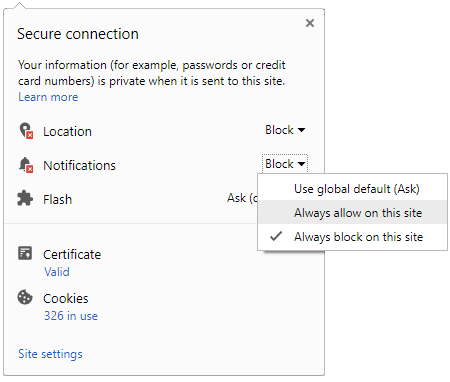
 Click it and Unblock the Notifications
ఆడిటర్ నివేదిక Pushpa Jewellers Ltd.
We have audited the financial statements of Pushpa
Jewellers Limited (Formerly known as Pushpa Jewellers
Private Limited) ("the Company"], which comprise the
Balance Sheet as at 31st March 2026, and the Statement
of Profit and Loss and Statement of Cash flows for the year
then ended, and notes to the financial statements including
material accounting policies and other explanatory
information.
In our opinion and to the best of our information and
according to the explanations given to us, the aforesaid
financial statements give the information required by the
Companies Act, 2013 ("Act"] in the manner so required and
give a true and fair view in conformity with the accounting
principles generally accepted in India, of the state of affairs
of the Company as at 31st March, 2026, and its profit and its
cash flows for the year ended on that date.
We conducted our audit in accordance with the Standards
on Auditing (SAs] specified under section 143(10] of the
Act. Our responsibilities under those Standards are further
described in the Auditor''s Responsibilities for the Audit
of the Financial Statements section of our report. We are
independent of the Company in accordance with the Code
of Ethics issued by the Institute of Chartered Accountants
of India together with the ethical requirements that are
relevant to our audit of the financial statements under the
provisions of the Act and the Rules thereunder, and we have
fulfilled our other ethical responsibilities in accordance
with these requirements and the Code of Ethics. We believe
that the audit evidence we have obtained is sufficient
and appropriate to provide a basis for our opinion on the
financial statements.
Key audit matters are those matters that, in our professional
judgement, were of most significance in our audit of the
financial statements of the current period. These matters
were addressed in the context of our audit of the financial
statements as a whole, and in forming our opinion thereon,
and we do not provide a separate opinion on these matters.
|
The Key Audit matters |
How the matter was addressed in our audit |
|
Revenue from Sale of Goods |
|
|
Revenue from the sale of goods |
Our audit procedures included the following: |
|
is recognized when the Company |
Assessed the Company''s revenue recognition accounting policies in line with |
|
performs its obligation to its customers |
AS 9 ("Revenue Recognition"] and tested thereof. |
|
measured reliably and recovery of the |
⢠Evaluated the integrity of the general information and technology control |
|
consideration is probable. The timing of such revenue recognition |
environment and testing the operating effectiveness of key IT application |
|
in case of sale of goods is when the |
⢠Evaluated the design, implementation and operating effectiveness of |
|
control over the same is transferred |
Company''s controls m respect of revenue recognition. |
|
upon delivery. The timing of revenue |
⢠Tested the effectiveness of such controls over revenue cut off at year-end. |
|
performance of the Company. The |
⢠On a sample basis, tested supporting documentation for sales transactions |
|
management considers revenue |
recorded during the year. |
|
performance. There is a risk of revenue |
⢠Performed an increased level of substantive testing in respect of sales |
|
being recorded before control is |
transactions recorded during the period closer to the year end and |
|
transferred. |
subsequent to the year end. |
|
Refer Note 2 to the Financial Statements |
⢠Compared revenue with historical trends and where appropriate, conducted |
|
- Material Accounting Policies and Note |
further enquiries and testing. ⢠Assessed disclosures m financial statements m respect of revenue, as |
Informntion Other thnn the Financials Statements and
Auditorâs Report thereon
⢠The Company''s Management and Board of Directors
are responsible for the other information. The other
information comprises the information included in the
Company''s Directors'' Report but does not include the
financial statements and auditor''s report thereon.
⢠Our opinion on the financial statements does not cover
the other information and we do not express any form
of assurance conclusion thereon.
⢠In connection with our audit of the financial statements,
our responsibility is to read the other information and,
in doing so, consider whether the other information is
materially inconsistent with the financial statements or
our knowledge obtained in the audit, or our knowledge
obtained in the audit or otherwise appears to be
materially misstated.
⢠If, based on the work we have performed, we conclude
that there is a material misstatement of this other
information, we are required to report that fact. We
have nothing to report in this regard.
Managementâs and Board of Directorsâ Responsibilities
for the Financial Statements
The Company''s Management and Board of Directors are
responsible for the matters stated in section 134(5) of the Act
with respect to the preparation of these financial statements
that give a true and fair view of the state of affairs, profit /
loss and other comprehensive income, changes in equity
and cash flows of the Company in accordance with the
accounting principles generally accepted in India, including
the Accounting Standards (AS) specified under Section 133
of the Act. This responsibility also includes maintenance
of adequate accounting records in accordance with the
provisions of the Act for safeguarding of the assets of the
Company and for preventing and detecting frauds and other
irregularities; selection and application of appropriate
accounting policies; making judgements and estimates that
are reasonable and prudent; and design, implementation
and maintenance of adequate internal financial controls,
that were operating effectively for ensuring the accuracy
and completeness of the accounting records, relevant to the
preparation and presentation of the financial statements
that give a true and fair view and are free from material
misstatement, whether due to fraud or error.
In preparing the financial statements, the Management
and Board of Directors are responsible for assessing
the Company''s ability to continue as a going concern,
disclosing, as applicable, matters related to going concern
and using the going concern basis of accounting unless the
Board of Directors either intends to liquidate the Company
or to cease operations, or has no realistic alternative but
to do so.
The Board of Directors is also responsible for overseeing
the Company''s financial reporting process.
Auditorâs Responsibility for the Audit of the Financial
Statements
Our objectives are to obtain reasonable assurance about
whether the financial statements as a whole are free from
material misstatement, whether due to fraud or error,
and to issue an auditor''s report that includes our opinion.
Reasonable assurance is a high level of assurance but is
not a guarantee that an audit conducted in accordance with
SAs will always detect a material misstatement when it
exists. Misstatements can arise from fraud or error and are
considered material if, individually or in the aggregate, they
could reasonably be expected to influence the economic
decisions of users taken on the basis of these Financial
Statements.
As part of an audit in accordance with SAs, we exercise
professional judgement and maintain professional
scepticism throughout the audit. We also:
⢠Identify and assess the risks of material misstatement
of the financial statements, whether due to fraud or
error, design and perform audit procedures responsive
to those risks, and obtain audit evidence that is sufficient
and appropriate to provide a basis for our opinion. The
risk of not detecting a material misstatement resulting
from fraud is higher than for one resulting from error,
as fraud may involve collusion, forgery, intentional
omissions, misrepresentations, or the override of
internal control.
⢠Obtain an understanding of internal financial control
relevant to the audit in order to design audit procedures
that are appropriate in the circumstances. Under
section 143(3)(i) of the Act, we are also responsible for
expressing our opinion on whether the company has
adequate internal financial controls with reference
to financial statements in place and the operating
effectiveness of such controls.
⢠Evaluate the appropriateness of accounting policies
used and the reasonableness of accounting estimates
and related disclosures made by Management and
Board of Directors.
⢠Conclude on the appropriateness of Management and
Board of Directors use of the going concern basis of
accounting in preparation of financial statements
and, based on the audit evidence obtained, whether
a material uncertainty exists related to events or
conditions that may cast significant doubt on the
Company''s ability to continue as a going concern. If
we conclude that a material uncertainty exists, we are
required to draw attention in our auditor''s report to the
related disclosures in the financial statements or, if
such disclosures are inadequate, to modify our opinion.
In our conclusions are based on the audit evidence
obtained up to the date of our auditor''s report. However,
future events or conditions may cause the Company to
cease to continue as a going concern.
⢠Evaluate the overall presentation, structure and content
of the financial statements, including the disclosures,
and whether the financial statements represent the
underlying transactions and events in a manner that
achieves fair presentation.
We communicate with those charged with governance
regarding, among other matters, the planned scope and
timing of the audit and significant audit findings, including
any significant deficiencies in internal control that we
identify during our audit.
We also provide those charged with governance with a
statement that we have complied with relevant ethical
requirements regarding independence, and to communicate
with them all relationships and other matters that may
reasonably be thought to bear on our independence, and
where applicable, related safeguards.
From the matters communicated with those charged with
governance, we determine those matters that were of most
significance in the audit of the financial statements of the
current period and are therefore the key audit matters. We
describe these matters in our auditor''s report unless law
or regulation precludes public disclosure nhout the matter
or when, in extremely rare circumstances, we determine
that a matter should not be communicated in our report
because the adverse consequences of doing so would
reasonably be expected to outweigh the public interest
benefits of such communication.
The Financial Statements for the year ended March 31,
2025, included in these financial statements have been
audited by erstwhile auditor who expressed an unmodified
opinion on those statements vide their report dated May 21,
2025.
Our Opinion is not modified in respect of above matters.
Report on Other Legal and Regulatory Requirements
1. As required by the Companies (Auditor''s Report) Order,
2020 ("the Orderâ) issued by the Central Government
of India in terms of section 143(11) of the Act, we give
in "Annexure Aâ a statement on the matters specified
in paragraphs 3 and 4 of the Order, to the extent
applicable.
2. A. As required by Section 143(3) of the Act, we report
that:
(a) We have sought and obtained all the infonnation
and explanations which to the best of our
knowledge and belief were necessary for the
purposes of our audit.
(b) In our opinion, proper books of account as
required by law have been kept by the Company
so far as it appears from our examination
of those books except for the matter stated
in the paragraph 2B(vi) below on reporting
under Rule 11(g) of the Companies (Audit and
Auditors) Rules, 2014.
(c) The Balance Sheet, the Statement of Profit and
Loss, and the Statement of Cash Flows dealt
with by this Report are in agreement with the
books of account.
(d) In our opinion, the aforesaid Financial
Statements comply with the AS specified under
Section 133 of the Act.
(e) Based on the written representations received
from the directors as on 31 March 2026 and
1 April 2026 taken on record by the Board of
Directors, none of the directors is disqualified
as on 31 March 2026 from being appointed as a
director in terms of Section 164 (2) of the Act.
(f) The modification relating to the maintenance
of accounts and other matters connected
therewith are as stated in the paragraph
2A(b) above on reporting under Section 143(3)
(b) of the Act and paragraph 2B(vi) below on
reporting under Rule 11(g) of the Companies
(Audit and Auditors) Rules, 2014.
(g) With respect to the adequacy of the internal
financial controls with reference to financial
statements of the Company and the operating
effectiveness of such controls, refer to our
separate Report in "Annexure B".
B. With respect to the others matters to be included in
the Auditor''s Report in accordance with Rule 11 of
the Companies (Audit and Auditors) Rules 2014, in
our opinion and to the best of our information and
according to explanations given to us;
i. The Company does not have any pending
litigations hence there is no impact of the
same on its financial position in the financial
statements.
ii. The Company has made provision, as required
under the applicable law or accounting
standards, for material foreseeable losses
if any, on long-term contracts including
derivative contracts.
iii. There has been no delay in transferring the
amounts required to be transferred to the
Investor Education and Protection Fund by the
Company.
iv. a) The management has represented that,
to the best of its knowledge and belief, no
funds have been advanced or loaned or
invested (either from borrowed funds or
share premium or any other sources or
kind of funds) by the company to or in any
other person (s) or entity (ies), including
foreign entities ("Intermediaries"), with
the understanding, whether recorded in
writing or otherwise, that the Intermediary
shall directly or indirectly lend or invest
in other persons or entities identified in
any manner whatsoever by or on behalf of
the company ("Ultimate Beneficiaries") or
provide any guarantee, security or the like
on behalf of the Ultimate Beneficiaries.
b) The management has represented that,
to the best of its knowledge and belief, as
disclosed in the notes to the accounts, no
funds have been received by the company
from any person (s) or entity (ies), including
foreign entities ("Funding Parties"), with
the understanding, whether recorded in
writing or otherwise, that the company
shall directly or indirectly, lend or invest in
other persons or entities identified in any
manner whatsoever by or on behalf of the
Funding Parties ("Ultimate Beneficiaries")
or provide any guarantee, security or the
like on behalf of the Ultimate Beneficiaries.
c) Based on the audit procedures that
have been considered reasonable and
appropriate in the circumstances, nothing
has come to our notice that has caused us
to believe that the representations under
sub-clause (i) and (ii) of Rule 11 (e) as
provided under (a) and (b) above, contain
any material misstatement.
v. The company has not declared or paid dividend
during the year.
vi. Based on our examination which included test
checks, the Company has used an accounting
software for maintaining its books of accounts
which has a feature of recording audit trail
(audit log) facility. However, due to limitations
in the system configuration, we are unable
to comment whether the audit trail feature
operated throughout the year for all relevant
transactions recorded in the software or
whether there were any instances of the audit
trail feature being tampered with. Additionally,
where audit trail (edit log) facility was enabled
and operated in previous year. The audit trail
has preserved by the Company as per the
statutory requirements for record retention.
C. With respect to the matter to be included in the
Auditor''s Report under Section 197(16) of the Act;
In our opinion and according to the information and
explanations given to us, the remuneration paid hy
the Company to its directors during the current year
is in accordance with the provisions of Section 197
of the Act. The remuneration paid to any director is
not in excess of the limit laid down under Section
197 of the Act. The Ministry of Corporate Affairs has
not prescribed other details under section 197 (16)
which are required to be commented upon by us.
For S K Agrawal and Co Chartered Accountants LLP
Chartered Accountants
Firm Reg. No.: 306033E/E300272
Rahul Agarwal
Partner
Place - Kolkata Membership No. 311830
Dated - 30th May 2026 UDIN - 26311830LURMJV3128
We have audited the accompanying standalone financial statements of the M/s. Pushpa
Jewellers Limited, which comprise the Standalone Balance Sheet as at 31st March,
2025, the standalone statement of Profit & Loss and the standalone statement of Cash
Flow for the year then ended and notes to the standalone financial statements, including
a summary of the significant accounting policies and other explanatory information.
In our opinion and to the best of our information and according to the explanations given
to us, the aforesaid standalone financial statements give the information required by the
Companies Act 2013 ("the act") in the manner so required and give a true and fair view
in conformity with the accounting principles generally accepted in India, of the state of
affairs of the Company as at March 31, 2025, its profit and cash flows for the ended on
that date.
Basis for Opinion
We conducted our audit in accordance with the Standards on Auditing (SAs) specified under
section 143(10) of the Companies Act, 2013. Our responsibilities under those Standards are
further described in the Auditorâs responsibilities for the audit of the Standalone Financial
Statements section of our report. We are independent of the Company in accordance with the
Code of Ethics issued by the Institute of Chartered Accountants of India together with the
ethical requirements that are relevant to our audit of the standalone financial statements
under the provisions of the Companies Act, 2013 and the rules there under, and we have
fulfilled our ethical responsibilities in accordance with these requirements and the Code of
Ethics.
We believe that the audit evidence we have obtained is sufficient and appropriate to provide a
basis for our opinion.
Key Audit Matters
Key Audit Matters are those matters that, in our professional judgment, were of most
significance in our audit of the Standalone Financial Statements for the current period. These
matters were addressed in the context of our audit of the standalone financial statements as a
whole, and in forming our opinion thereon, and we do not provide a separate opinion on these
matters.
We have not determined any matters as Key audit matters to be communicated in our reports.
Information Other than the Standalone Financial Statements and Auditorâs Report
Thereon
The Companyâs board of directors is responsible for the preparation of the other information.
The other information comprises the information included in the Boardâs Report including
Annexure to Boardâs Report, Business Responsibility Report but does not include the
standalone financial statements and our auditorâs report thereon.
Our opinion on the standalone financial statements does not cover the other information and
we do not express any form of assurance conclusion thereon.
In connection with our audit of the standalone financial statements, our responsibility is to
read the other information and, in doing so, consider whether the other information is
materially inconsistent with the standalone financial statements or our knowledge obtained in
the audit, or otherwise appears to be materially misstated.
If, based on the work we have performed, we conclude that there is a material misstatement of
this other information; we are required to report that fact. We have nothing to report in this
regard.
Managementâs Responsibility for the Standalone Financial Statements
The Companyâs board of directors are responsible for the matters stated in section 134 (5) of
the Act with respect to the preparation of these standalone financial statements that give a
true and fair view of the financial position, financial performance and cash flows of the
Company in accordance with the accounting principles generally accepted in India, including
the accounting standards specified under section 133 of the Act. This responsibility also
includes maintenance of adequate accounting records in accordance with the provisions of the
Act for safeguarding of the assets of the Company and for preventing and detecting frauds and
other irregularities; selection and application of appropriate accounting policies; making
judgments and estimates that are reasonable and prudent; and design, implementation and
maintenance of adequate internal financial controls, that were operating effectively for
ensuring the accuracy and completeness of the accounting records, relevant to the preparation
and presentation of the standalone financial statement that give a true and fair view and are
free from material misstatement, whether due to fraud or error.
In preparing the standalone financial statements, management is responsible for assessing
the Companyâs ability to continue as a going concern, disclosing, as applicable, matters
related to going concern and using the going concern basis of accounting unless
management either intends to liquidate the Company or to cease operations, or has no
realistic alternative but to do so.
The Board of Directors are also responsible for overseeing the companyâs financial reporting
process.
Auditorâs Responsibilities for the Audit of the Standalone Financial Statements
Our objectives are to obtain reasonable assurance about whether the standalone financial
statements as a whole are free from material misstatement, whether due to fraud or error, and
to issue an auditorâs report that includes our opinion. Reasonable assurance is a high level of
assurance, but is not a guarantee that an audit conducted in accordance with SAs will always
detect a material misstatement when it exists. Misstatements can arise from fraud or error and
are considered material if, individually or in the aggregate, they could reasonably be expected
to influence the economic decisions of users taken on the basis of these standalone financial
statements. As part of an audit in accordance with SAs, we exercise professional judgment and
maintain professional skepticism throughout the audit. We also:
⢠Identify and assess the risks of material misstatement of the standalone financial
statements, whether due to fraud or error, design and perform audit procedures
responsive to those risks, and obtain audit evidence that is sufficient and appropriate to
provide a basis for our opinion. The risk of not detecting a material misstatement
resulting from fraud is higher than for one resulting from error, as fraud may involve
collusion, forgery, intentional omissions, misrepresentations, or the override of internal
control.
⢠Obtain an understanding of internal financial controls relevant to the audit in order to
design audit procedures that are appropriate in the circumstances. Under section
143(3)(i) of the Act, we are also responsible for expressing our opinion on whether the
company has adequate internal financial controls system in place and the operating
effectiveness of such controls.
⢠Evaluate the appropriateness of accounting policies used and the reasonableness of
accounting estimates and related disclosures made by management.
⢠Conclude on the appropriateness of managementâs use of the going concern basis of
accounting and, based on the audit evidence obtained, whether a material uncertainty
exists related to events or conditions that may cast significant doubt on the Companyâs
ability to continue as a going concern. If we conclude that a material uncertainty exists,
we are required to draw attention in our auditorâs report to the
related disclosures in the standalone financial statements or, if such disclosures are
inadequate, to modify our opinion. Our conclusions are based on the audit evidence
obtained up to the date of our auditorâs report. However, future events or conditions may
cause the Company to cease to continue as a going concern.
⢠Evaluate the overall presentation, structure and content of the standalone financial
statements, including the disclosures, and whether the standalone financial statements
represent the underlying transactions and events in a manner that achieves fair
presentation.
We communicate with those charged with governance regarding, among other matters, the
planned scope and timing of the audit and significant audit findings, including any significant
deficiencies in internal control that we identify during our audit.
We also provide those charged with governance with a statement that we have complied
with relevant ethical requirements regarding independence, and to communicate with them
all relationships and other matters that may reasonably be thought to bear on our
independence, and where applicable, related safeguards.
From the matters communicated with those charged with governance, we determine those
matters that were of most significance in the audit of the standalone financial statements of
the current period and are therefore the key audit matters. We describe these matters in our
auditorâs report unless law or regulation precludes public disclosure about the matter or
when, in extremely rare circumstances, we determine that a matter should not be
communicated in our report because the adverse consequences of doing so would
reasonably be expected to outweigh the public interest benefits of such communication.
Report on Other Legal and Regulatory Requirements
1. As required by the Companies (Auditorâs Report) Order, 2020 (âthe Orderâ) issued by the
Central Government of India in terms of sub-section (11) of section 143 of the Act, we give in
âAnnexure Aâ, a statement on the matters specified in the paragraph 3 and 4 of the order.
2. A. As required by section 143(3) of the Act, we report that:
a) We have sought and obtained all the information and explanations which to the best of
our knowledge and belief were necessary for the purposes of our audit;
b) In our opinion, proper books of account, as required by law have been kept by the
Company so far as it appears from our examination of those books.
c) The Balance Sheet, the Statement of Profit and Loss and the statement of Cash Flow
dealt with by this Report are in agreement with the relevant books of account;
d) In our opinion, the aforesaid standalone financial statements comply with the accounting
Standards specified under section 133 of the Act read with Rule 7 of the Companies
(Accounts) Rules, 2014.
e) On the basis of written representations received from the directors, as on 31st March
2025 taken on record by the Board of Directors, none of the directors is disqualified as on
31st March, 2025 from being appointed as a director in terms of Section 164(2) of the Act.
f) With respect to the adequacy of Internal Financial Controls over financial reporting of
the company and the operating effectiveness of such controls, refer to our separate Report
in Annexure âBâ. Our Report expresses an unmodified opinion on the adequacy and
operating effectiveness of the companyâs internal financial controls over financial
reporting.
B. With respect to the other matters to be included in the Auditorâs Report in accordance
with Rule 11 of the Companies (Audit and Auditors) Rules, 2014, in our opinion and to the
best of our information and according to the explanations given to us:
i. The Company does not have any pending litigations hence there is no impact of
the same on its financial position in its standalone financial statement.
ii. The Company has made provision, as required under the applicable law or
accounting standards, for material foreseeable losses, if any, on long-term
contracts including derivative contracts.
iii- There has been no delay in transferring amounts, required to be transferred, to
the Investor Education and Protection Fund by the Company.
iv. (a) The Management has represented that, to the best of its knowledge and belief,
no funds have been advanced or loaned or invested (either from borrowed funds or
share premium or any other sources or kind of funds) during the year by the
Company to or in any other persons or entities, including foreign entities
(âIntermediariesâ), with the understanding, whether recorded in writing or otherwise,
that the Intermediary shall:
⢠Directly or indirectly lend or invest in other persons or entities identified in
any manner whatsoever (âUltimate Beneficiariesâ) by or on behalf of Company or
⢠Provide any guarantee, security or the like to or on behalf of the Ultimate
Beneficiaries.
(b) The management has represented, that, to the best of its knowledge and
belief, no funds have been received by the company from any persons or
entities (âFunding Partiesâ), with the understanding, whether recorded in
writing or otherwise, that the company shall:
⢠Directly or indirectly, lend or invest in other persons or entities identified in
any manner whatsoever (âUltimate Beneficiariesâ) by or on behalf of the funding
party or
⢠Provide any guarantee, security or the like form or on behalf of the Ultimate
Beneficiaries; and (c) Based on such audit procedures as considered
reasonable and appropriate in the circumstances, nothing has come to our
notice that has caused us to believe that representations under sub clause
(iv)(a) and (iv)(b) contain any material misstatement.
v. The Company has not declared or paid dividend during the year.
b) The reporting under Rule 11(g) of the companies (Audit & Auditor) Rules,
2014 is applicable from 1 April 2023. The company has used accounting
software for maintaining it books of account, which have a feature of recording
audit trail (edit log) facility and the same has operated throughout the year for
all relevant transactions recorded in the respective software further Audit trail
features was not tempered during the said period. The feature of recoding
audit trail (edit log) facility was enabled at the database level to log any direct
data changes for the accounting software used for maintaining the books of
account.
C) With respect to the other matters to be included in the Auditor''s Report in accordance
with the requirements of Section 197(16) of the Act, as amended in our opinion and to the
best of our information and according to explanation given to us, the remuneration paid by
the company to its directors during the year is in accordance with the provisions of the Act.
For Agrawal Uma Shankar & Co.
(Chartered Accountants)
Firmâs Registration No.: 326700E
CA Uma Shankar Agrawal
Place: Kolkata Membership No: 066497
Date: 21.05.2025 UDIN No.: 25066497BMHFZF3573
Disclaimer: This is 3rd Party content/feed, viewers are requested to use their discretion and conduct proper diligence before investing, GoodReturns does not take any liability on the genuineness and correctness of the information in this article

 Sign in with Google