



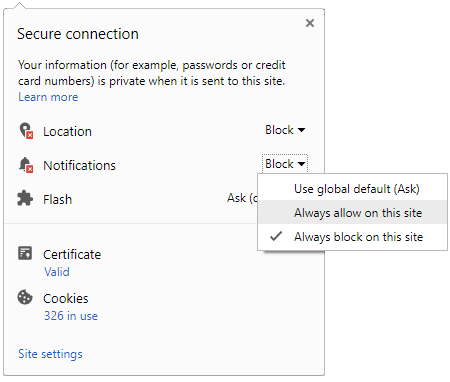
 Click it and Unblock the Notifications
Pushpa Jewellers Ltd. కంపెనీ అకౌంటింగ్ విధానాలు
2. SUMMARY OF SIGNIFICANT ACCOUNTING POLICIES
(i) Basis of preparation of Financial Statements:
These Financial Statements of the Company have
been prepared in accordance with the Generally
Accepted Accounting Principles in India (''Indian
GAAP'') to comply with the Accounting Standards
specified under Section 133 of the Companies
Act, 2013, read with Rule 7 of the Companies
(Accounts) Rules, 2014 and the relevant
provisions of the Companies Act, 2013. The
Financial Statements have been prepared under
the historical cost convention on accrual basis.
All amounts included in the Financial Statements
are reported in lakhs and 2 decimals thereof in
Indian Rupees except for Number of shares
and EPS wherever disclosed in these financial
statements.
(ii) Presentation and disclosure of Financial
Statements:
During the year end March 31,2026, the Company
has presented the Financial Statements as per
the Schedule III notified under the Companies
Act, 2013. The statement of Cash Flows has been
prepared and presented as per requirements of
AS 3 "Cash Flow Statementsâ. The disclosure
requirements with respect to items in the Balance
sheet and Profit & Loss Account, as prescribed in
Schedule III of the Act are presented by way of
notes forming part of the Financial Statements.
The Company has also reclassified the previous
figures in accordance with the requirements
applicable in the current year.
Accounting policies have been consistently
applied from year-on-year basis.
(iii) Use of Estimates:
The preparation of financial statements is in
conformity with Indian GAAP (Generally Accepted
Accounting Principles) which requires the
management to make judgments, estimates and
assumptions that affect the reported amounts of
revenues, expenses, assets and liabilities and the
disclosure of contingent liabilities, at the end of
the reporting period. Although these estimates
are based on the management''s best knowledge
of current events and actions, uncertainty about
these assumptions and estimates could result in
the outcomes requiring a material adjustment
to the carrying amounts of assets or liabilities in
future periods.
(iv) Property, Plant & Equipment:
Property, Plant & Equipment are carried at cost
of acquisition and other applicable costs less
accumulated depreciation/amortization and
accumulated impairment loss, if any. The cost
of fixed assets includes cost of acquisition plus,
any freight, taxes, duties and other incidental
expenses that are directly attributable to bring
the assets to their working conditions for their
intended use.
Capital work-in-progress, if any comprises of the
cost of fixed assets that are not yet ready for their
intended use at the balance sheet date. Assets
held for disposal, if any are stated at the lower of
net book value and the estimated net realizable
value.
When parts of the items of property, plant and
equipment have different useful lives, they
are accounted for as separate items (major
components) of property, plant and equipment.
Subsequent expenditure relating to the property,
plant and equipment is capitalized only when
it is probable that future economic benefits
associated with these will flow to the Company
and the cost of the item can be measured reliably.
Gain/loss arising from de-recognition/sale/
disposal of fixed assets are measured as
the difference between the net disposal/sale
proceeds and the carrying amount of the assets
and are recognized in the statement of profit or
loss when the asset is derecognized/disposed off.
Advances paid towards the acquisition of fixed
assets, if any outstanding as of balance sheet date
is disclosed under long term loans and advances.
Machinery spares which does not qualify for
definition of Property, Plant or Equipment can be
classified under the head Inventories. Other than
these all can be classified under AS-10.
The Company can decide to expense an item if
the amount of expenditure is not material to be
included as Plant, Property or Equipment.
(v) Intangible Assets:
Intangible assets are stated at the consideration
paid for acquisition less accumulated
amortization and accumulated impairment
losses, if any.
(vi) Borrowing Costs:
Loan processing charges and interest expenses
paid to Bank for CC facilities and Term Loans have
been charged to revenue account since the same
are not attributable to the acquisition of qualifying
assets as per the requirements of AS 16.
Borrowing cost primarily includes interest
and amortization of ancillary costs incurred in
connection with the arrangement of borrowings.
(vii) Depreciation/Amortization:
Depreciation on tangible fixed assets is calculated
on the Straight-Line Method (SLM) based on the
useful lives and residual values estimated by
the management in accordance with Schedule
II to the Companies Act, 2013. The identified
components are depreciated separately over
their useful lives; the remaining components are
depreciated over the life of the principal asset.
Intangible assets, if any are amortized on basis of
the economic benefits consumed by the Company
over the projected useful life and if the pattern of
economic benefits cannot be identified reliably
then the straight-line method is used.
No assets have been revalued during the year.
The Company has used the following useful lives
to provide depreciation on its tangible assets and
intangible assets.
(viii) Impairment of Tangible and Intangible Assets:
As per the estimates made by the management
and as per the various assessments made by the
management, there were no indicators whether
internal or external (as provided in para 8 of
AS 28) which has led to the impairment loss to
any assets. Since there are no such indicators
which suggest that the net value of the assets
would fall significantly by passage of time and
normal use, the Company has not provided
for any impairment loss for any assets during
the current financial period. The Company
has chosen the "value in useâ technique and
as per the measurement of future cash flow,
the management is of the opinion that the
future cash flow and the terminal value of the
assets would not be significantly less than the
carrying value and hence no impairment for any
assets has been provided for in the financial
statements.
No reversal of impairment loss has been
recognized in the Profit & Loss Account.
Since the Company has not carried out the
activities in segments, the impairment loss or
reversal of the impairment loss has not been
provided for the segments.
In the opinion of the Board of Directors and to the
best of their knowledge and belief the aggregate
value of the current assets, loans and advances
on realization in the ordinary course of business,
will not be less than the amount at which they are
stated in the Balance Sheet.
(ix) Investments:
Investments which are readily realizable and
intended to be held for not more than one year
from the date on which such investments are
made, are classified as current investments. All
other investments are classified as long- term
investments.
On initial recognition, all investments are
measured at cost. The cost comprises purchase
price and directly attributable acquisition charges
such as brokerage, fees and duties.
Current investments are carried in the Financial
Statements at lower of cost and fair value
determined in respect of each category of the
investments. Long-term investments are carried
at cost. However, provision for diminution in
value, if any is made to recognize a decline other
than temporary in the value of the investments.
On disposal of an investment, if any, the difference
between its carrying amount and net disposal
proceeds is charged or credited to the statement
of profit and loss.
(x) Government Grants and Subsidies:
Grants and subsidies from the government are
recognized when there is reasonable assurance
that:
i. The Company will comply with the conditions
attached to them; and
ii. The grant/subsidy will be received.
When the grant or subsidy relates to revenue, it
is recognized as income on a systematic basis in
the statement of profit and loss over the periods
necessary to match them with the related costs,
which they are intended to compensate. Where
the grant relates to an asset, it is recognized as
deferred income and released to income in equal
amounts over the expected useful life of the
related asset.
Where the company receives non-monetary
grants, the assets is accounted for on the basis of
its acquisition cost. In case a non-monetary asset
is given free of cost it is recognized at nominal
value.
(xi) Inventories:
Inventories are stated at the lower of cost and net
realizable value by following weighted average
method. Cost of Inventories comprises all cost
of purchase and other cost incurred in bringing
inventories to their present location and condition.
Cost in case of work in progress is determined on
the basis of the actual expenditure attributable to
the said work till the end of the reporting period.
Net realizable value represents the estimated
selling price for inventories less all estimated
costs of completion and costs necessary to make
the sale.
(xii) Revenue Recognition:
Revenue comprises sale of materials, service
income and interest. Revenue is recognized to the
extent it is probable that the economic benefits
will flow to the Company and that the revenue
can be reliably measured. The Company collects
Goods and Services Tax (GST) as applicable on
behalf of the government and therefore, this is
not economic benefits flowing to the Company.
Hence, this is excluded from revenue.
Sales:
Revenue from sale of goods is recognized in the
statement of profit and loss when the significant
risks and rewards in respect of ownership of
goods has been transferred to the buyer as per
the terms of the respective sales order, and the
income can be measured reliably and is expected
to be received.
Revenue is measured on the basis of sale price,
after deduction of any trade discounts, volume
rebates and any taxes or duties collected on behalf
of the Government such as goods and services tax,
etc. Accumulated experience is used to estimate
the provision for such discounts and rebates.
Revenue is only recognized to the extent that it is
highly probable a significant reversal will not occur.
Revenue from sales of Services:
Revenue from making charges on jewellery
manufactured using customers'' gold is recognized
upon completion of the manufacturing service
and delivery of the finished jewellery. Revenue is
accounted for based on the making charges billed
to customers when the service is rendered and
there is no significant uncertainty regarding its
ultimate collection.
Interest Income:
Interest income is recognized on a time
proportion basis taking into account the amount
outstanding and the rate applicable.
(xiii) GST:
GST credit available on purchase of materials,
purchase of capital goods and input services is
not charged to cost of material, capital goods and
services. GST Credit availed is accounted by way
of adjustment against GST payable on dispatch of
finished goods & rendering of services.
(xiv) Retirement and other Employee benefits:
Short Term Employee Benefits:
Short term benefits including salaries, bonus, social
security contributions, and non-monetary benefits
(such as medical care) for current employees are
estimated and measured on an undiscounted basis
and charged to the profit and loss account.
Long Term Employee Benefits:
Defined Contribution Plan:
All eligible employees of the Company are entitled
to receive benefits under the provident fund,
a defined contribution plan in which both the
employee and the Company contribute monthly at
a stipulated percentage of the covered employee''s
salary. Contributions are made to Employees
Provident Fund Organization in respect of
Provident Fund, Pension Fund and Employees
Deposit Linked Insurance Scheme, as applicable
at the prescribed rates and are charged to
Statement of Profit and Loss at actuals.
Defined Benefit Plan:
Gratuity has been ascertained and recognized in
the accounts on the basis of independent actuarial
valuation. Employees are not eligible for any other
long-term benefits as per service conditions and
hence not provided in the accounts. The company
is not registered under Gratuity Act.
The cost of providing benefits under the defined
benefit plan is based on an independent actuarial
valuation carried out using the projected unit
credit method.
Actuarial gain/loss is directly credited/debited to
the Profit and loss account.
Net interest is calculated by applying the discount
rate to the net defined benefit liability or asset.
(xv) Foreign Exchange Transactions:
Foreign currency monetary items such as
Loans, Current assets and Current liabilities are
recognized at the Exchange Rate on the date of
transaction.
Exchange differences arising on reporting the
above items at rate differently from when they
were initially recorded during the period are
recognized as income / expenditure in the Profit
& Loss Account.
(xvi) Taxation:
Tax expense comprises current and deferred tax.
Current income-tax is measured at the amount
expected to be paid to the tax authorities in
accordance with the Income Tax Act, 1961 enacted
in India and tax laws prevailing in the respective tax
jurisdictions where the Company operates. The tax
rates and tax laws used to compute the amount are
those that are enacted or substantively enacted, at
the reporting date. Current income tax relating to
items recognized directly in equity is recognized in
equity and not in the statement of profit and loss.
The amount of current tax actually determined at
the time of filing of IT return for the Assessment
Year determines the final self-assessment tax
liability and accordingly the Company has reversed
the excess provision of current tax charged to
statement of profit and loss in earlier period or
made additional provision for current tax not
charged to statement of profit & loss, in current
reporting period as the case may be.
Deferred income taxes reflect the impact of
timing differences between taxable income
and accounting income originating during the
current year and reversal of timing differences
for the earlier years. Deferred tax is measured
using the tax rates and the tax laws enacted
or substantively enacted at the reporting date.
Deferred income tax relating to items recognized
directly in equity is recognized in equity and not
in the statement of profit and loss.
Deferred tax Liabilities are recognized for all
taxable timing differences. Deferred tax assets
are recognized for deductible timing differences
only to the extent that there is reasonable
certainty that sufficient future taxable income
will be available against which such deferred
tax assets can be realized. In situations where
the Company has unabsorbed depreciation or
carry forward tax losses, all deferred tax assets
are recognized only if there is virtual certainty
supported by convincing evidence that they can
be realized against future taxable profits.
At each reporting date, the Company re-assesses
unrecognized deferred tax assets. It recognizes
unrecognized deferred tax asset to the extent
that it has become reasonably certain or virtually
certain, as the case may be, that sufficient future
taxable income will be available against which
such deferred tax assets can be realized.
The carrying amount of deferred tax assets are
reviewed at each reporting date. The Company
writes-down the carrying amount of deferred tax
asset to the extent that it is no longer reasonably
certain or virtually certain, as the case may be,
that sufficient future taxable income will be
available against which deferred tax asset can
be realized. Any such write down is reversed to
the extent that it becomes reasonably certain
or virtually certain, as the case may be, that
sufficient future taxable income will be available.
Deferred tax assets and deferred tax liabilities
are offset, if a legally enforceable right exists
to set-off current tax assets against current
tax liabilities and the deferred tax assets and
deferred taxes relate to the same taxable entity
and the same taxation authority.
Separate and detailed calculations of deferred
tax is appended in these notes.
2 Summary of Significant Accounting Policies.
a. AS - 1 Presentation and Disclosure of Financial Statements
Use of Estimates
The preparation of financial statements is in conformity with Indian GAAP (Generally Accepted Accounting Principles) which requires the management tomake judgments,
estimates and assumptions that affect the reported amounts of revenues, expenses, assets and liabilities and the disclosure of contingent liabilities, at the end of the
reporting period. Although these estimates are based on the management''s best knowledge of current events and actions, uncertainty about these assumptions and
estimates could result in the outcomes requiring a material adjustments to the carrying amounts of assets or
liabilities in future periods. Previous year figures have been regrouped or rearranged wherever necessary.
b. AS - 2 Valuation of inventories
Inventories are stated at lower of the cost or net realizable value, net realizable value is the estimated selling price in the ordinary course of business less the estimated cost
of completion and selling expenses. The cost is determined on the basis of the weighted average method and includes expenditure in acquiring the inventories and bringing
them to their present location and condition. In the case of manufactured inventories and work in progress, costincludes an appropriate share of labour and overheads.
c. AS - 3 Cash Flow Statements
Cash and Cash Equivalents
Cash Flow Statement has been prepared under Indirect Method. Cash and cash equivalents for the purpose of cash flow statement comprise cash at bank and in hand and
short-term investments with an original maturity of three months or less. Other Bank Balance includes Deposit with original maturity for more than 3 months but less than
12 months.
d. AS - 4 Events Occurring after the Balance Sheet date
Assets and Liabilities are adjusted for events occurring after the Balance Sheet date that provide additional evidence to assist the estimation of amounts relating to
condition existing at the Balance sheet date.
e. AS - 5 Net Profit or Loss for the Period, Prior Period Items, and changes in Accounting Policies
Significant items of Extra-Ordinary Items, and Prior Period Incomes and Expenditures, are accounted in accordance with Accounting Standard 5.
f. AS - 6 Depreciation Accounting
Depreciable amount of assets is the cost of an asset, or other amount substituted for cost, less its estimated residual value. Depreciation on
tangible fixed assets has been provided on the Straight Line Method as per the useful life prescribed in Schedule II of the companies Act, 2013.
g. AS - 9 Revenue Recognition
Revenue is recognized to the extent that it is probable that the economic benefits will flow to the company and the revenue can be reliably measured. The following
specific recognition criteria must also be met before revenue is recognized:
Sale of goods
Revenue form sale of goods is recognized when all the significant risks and rewards of ownership of the goods have been passed to the buyer, usually on delivery of
goods. The company collects Goods & Service Taxes(GST) on behalf of the government and, therefore, these are not economic benefits flowing to the company. Hence,
they are excluded from revenue. Revenue is measured on the basis of sale price, after deduction of any trade discounts, volume rebates and any taxes or duties
collected on behalf of the Government such as goods and services tax, etc. Accumulated experience is used to estimate the provision for such discounts and rebates.
Revenue is onlyrecognised to the extent that it is highly probable a significant reversal will not occur.
Interest
Interest income is recognized on a time proportion basis taking into account the amount outstanding and the applicable interest rate. Interest income is
included under the head âother income" in the statement of profit and loss.
h. AS - 10 Accounting For Property, Plant & Equipment
i. Assets which qualify for the definition of Plant Property & Equipment are stated at their cost of acquisition or construction amount (net of cenvat, wherever applicable)
less accumulated depreciation / amortization and impairment loss, if any. Cost comprises the purchase price, installation and attributable cost of bringing the asset to its
working condition for its intended use.Also, an initial estimate of costs of decommissioning, restoration and similar liabilities.
ii. Machinery spares which does not qualify for definition of Property, Plant or Equipment can be classified under the head Inventories. Other than these all can be
classified under AS-10.
iii. The Company can decide to expense an item if the amount of expenditure is not material to be included as Plant, Property or Equipment.
i. AS - 11 Accounting for Effects in Foreign Exchange Rates
i. Foreign currency monetary items such as Loans, Current assets and Current liabilities are recognized at the Exchange Rate on the date of transaction.
ii. Exchange differences arising on reporting the above items at rate differently from when they were initially recorded during the period are recognized as income /
expenditure in the Profit & Loss Account.
j. AS - 12 Accounting for Government Grants
i. Grants and subsidies from the government are recognized when there is reasonable assurance that the company will comply with the conditions attached to them and
the grant / subsidy will be received.
ii. When the grant or subsidy relates to revenue, it is recognized as income on a systematic basis in the statement of profit and loss over the periods necessary to match
them with the related costs, which they are intended to compensate. Where the grant relates to an asset, it is recognized as deferred income and released to income in
equal amounts over the expected useful life of the released asset.
iii. Where the company receives non-monetary grants, the assets is accounted for on the basis of its acquisition cost. In case a non-monetary asset is given free of cost it is
recognized at nominal value.
k. AS - 13 Investments
Investments, which are readily realizable and intended to be held for not more than one year from the date on which such investments are made, are classified as current
investments. All other investments are classified as long-term investments. Current investments are carried in the financial statements at lower of cost and fair value
determined on an individual investment basis. Long-term investments are carried at cost. However, provision for diminution in value is made to recognize a decline other
than temporary in the value of the investments. On disposal of an investment, the difference between its carrying amount and net disposal proceeds is charged or credited
to the statement of profit and loss.
l. AS - 15 Employee Benefits
1. Defined Contribution Plan
Employee Benefits in the form of provident fund, ESIC and other labour welfare fund are considered as defined contribution plan and the contributions are charged to the
profit and loss account of the year when the contributions to the respective fund are due.
2. Defined Benefit Plan
Gratuity has been ascertained and recognized in the accounts on the basis of independent actuarial valuation. Employees are not eligible for any other long-term benefits
as per service conditions and hence not provided in the accounts. The company is not registered under Gratuity Act.
3. All short term employee benefits such as salaries, incentives, special awards, medical benefits, bonus which fall due within 12 months of the period in which the
employees renders the related services and which the employee is entitled to avail, are recognized in the statement of profit and loss on accrual basis without discounting."
m. AS - 16 Borrowing Cost
Borrowing cost includes interest, amortization of ancillary costs incurred in connection with the arrangement of borrowings and exchange difference arising from foreign
currency borrowings to the extent they are regarded as an adjustment to the interest cost. Borrowings Costs directly attributable to the acquisition, construction or
production of an asset that necessarily taken a substantial period of time to get ready for its intended use or sale are capitalized as part of the cost of the respective asset.
All other borrowings costs are expensed in the period they occur.
n. AS - 18 Related Party Transactions
Related Party Transactions are disclosed in the Notes to Accounts.
o. AS - 20 Earnings Per Share
Basic earnings per share are calculated by dividing the net profit or loss for the period attributable to equity shareholders by the weighted average number of equity shares
outstanding during the period. For the purpose of calculating diluted earnings per share, the net profit or loss for the period attributable to equity shareholders and the
weighted average number of shares outstanding during period are adjusted for the effects of all dilutive potential equity shares.
p. AS - 22 Accounting for Taxes on Income
Tax expense comprises current and deferred tax. Current Income-tax is measured at the amount expected to be paid to the tax authorities in accordance with the Income
Tax Act, 1961 enacted in India. The tax rates and tax laws used to compute the amount are those that are enacted or substantively enacted, at the reporting date. Deferred
income taxes reflect the impact of timing differences between taxable income and accounting income originating during the current year and reversal of timing differences
for the earlier years. Deferred tax liablities are recognised for all timing differences. Deferred tax is measured using the tax rates and the tax laws enacted or substantively
enacted at the reporting date. Deferred tax assets are recognised only to the extent that there is reasonable certainty that they will be realised in future.However,where
there is unabsorbed depreciation and carry forward loss under the income tax laws, deferred tax assets are recognised only if there is a virtual certainty of realisation of
such assets. Deferred tax assets are reviewed at each balance sheet date and written down or written off to reflect the amount that is reasonably/virtually certain (as the
case my be)to be realised. Minimum Alternate Tax (MAT) paid in a year is charged to the statement of profit and loss as current tax. The company recognizes MAT credit
available as an asset only to the extent that there is convincing evidence that the company will pay normal income tax during the specified period i,e the period for which
MAT credit is allowed to be carried forward. In the year in which the company recognizes MAT credit as an asset in accordance with the guidance note on accounting for
credit available in respect of Minimum Alternative Tax under the income tax Act, 1961, the said asset is created by way of credit to the statement of profit and loss and
shown as "MAT Credit Entitlement". The company reviews the "MAT credit entitlement" asset at each reporting date and writes down the asset to the extent the company
does not have convincing evidence that it will pay normal tax during the specified period.
q. AS - 26 Intangible Assets
Intangible assets are recognized when the assets is identifiable, is within the control of the Company, it is probable that the future economic benefits that are attributable to
the assets will flow to the company and cost of the assets can be reliably measured. Acquired intangible assets are recorded at acquisition cost and amortized on written down
value basis based on the useful lives of the assets, which in management''s estimate represents the period during which economic benefits will be derived from their use.
r. AS - 28 Impairment of Assets
The carrying amount of the Company''s assets including intangible assets are reviewed at each Balance Sheet date to determine whether there is any indication of
impairment. If any such indication exists, the assets recoverable amount is estimated, as the higher of the net selling price and the value in use. An impairment loss is
recognized whenever the carrying amount of an asset or its cash-generating unit exceeds its recoverable amount. If at the balance sheet date, there is an indication that a
previously assessed impairment loss no longer exists, the recoverable amount is reassessed and the assets is reinstated at the recoverable amount subject to maximum of
depreciable historical cost.
Disclaimer: This is 3rd Party content/feed, viewers are requested to use their discretion and conduct proper diligence before investing, GoodReturns does not take any liability on the genuineness and correctness of the information in this article

 Sign in with Google